Search topics on the kingdom blog…

Browse Audiences

Explore Truths

Follow Us

WHY ARE YOU IN THE CHURCH?

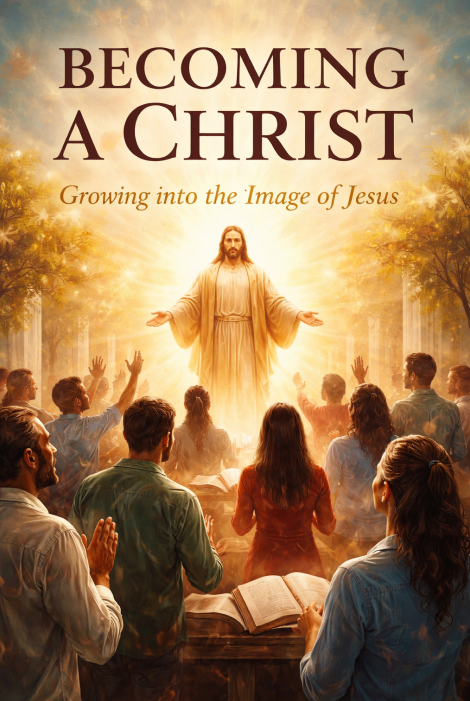
Why You Are In The Church: Becoming A Christ
you-are-in-church-to-become-a-christ

Introduction

Many people come to church for community, comfort, miracles, or answers to life’s questions. While these are not wrong, they are not the primary reason God brings a person into the Church. The Church exists first as a training grounda spiritual system designed to produce Christs.

The word Christian did not begin as a religious label. Believers were first called Christians in Antioch because Christ was visibly expressed through them. People could see Jesus mirrored in their lives and concluded that they had been with Him. Christianity, therefore, was never meant to be a label; it was meant to be a likeness.

To be in the Church, therefore, is to be on a journey of becoming an image of Jesus Christ—the pattern that is pleasing and acceptable to God (Matthew 3:17).

Just as no one becomes a professional without training, no one becomes a Christ without formation. Every vocation requires apprenticeship, discipline, and growth. In God’s Kingdom, the Church is that vocational center where men and women are shaped into the image of Christ.

This leads to the critical question:

How does a believer become a Christ?

The Journey of Becoming a Christ

1. Entry Into the System — Salvation

Every system has a legitimate entry point. No one practices a vocation without first being admitted into the training process. In God’s Kingdom, salvation is that entry point.

Jesus personally called His disciples, and each one responded by leaving an old life behind to follow Him. Salvation is not merely saying a prayer; it is a surrender of life’s direction. It is a conscious decision to abandon self-rule and submit to the Lordship of Jesus Christ.

This decision is expressed by believing in the heart and confessing with the mouth that Jesus is Lord and Saviour (Romans 10:9–10). Without this step, the journey of becoming a Christ cannot begin.

2. Transformation — Learning the Life of the Master

After entry comes formation. A new apprentice does not instantly become skilled; learning is progressive. Adjustment, correction, imitation, and discipline are all part of the process.

In the same way, the believer begins a transformation journey—being conformed to the image of Christ. Jesus’ teachings, especially those recorded in passages like Matthew 5, reveal the values, culture, and conduct of the Kingdom. Over time, the believer learns how Christ thinks, speaks, responds, and lives.

The goal of this stage is clear: to become like the Master.

The disciples witnessed a way of life in Jesus that was completely different from the religious system they knew. They saw authority without hypocrisy, power without pride, and holiness without pretense. What they observed stirred a desire to reflect Him.

This transformation is not automatic. It requires intentional daily alignment.

Daily Practices That Shape a Christ

  • The Word: Regular exposure to Scripture renews the mind and redefines values. The Word is not just read; it is obeyed and allowed to judge thoughts and motives.
  • Prayer: Prayer is more than asking—it is communion, alignment, and submission to God’s will.
  • Fellowship: Growth happens in community. Christlikeness is refined through relationships, accountability, and shared pursuit.
  • Obedience: Transformation is accelerated when truth is practiced, not merely known.

3. Evidence of Change — Bearing Fruit

True learning produces visible results. An apprentice who is progressing will show signs of growth, maturity, and competence.

Jesus often evaluated His disciples—not to condemn them, but to measure their alignment with what they were being taught. Their responses, decisions, and attitudes revealed how much of His life had been formed in them.

In the same way, a believer’s life begins to display the fruit of transformation. Character, conduct, and spiritual fruit become evidence that Christ is being formed within (Matthew 7:20; Galatians 5:22–23).

Practical Markers of Growth

  • A growing sensitivity to sin and quicker repentance
  • Increasing love, humility, patience, and self-control
  • Changed responses to pressure, offense, and temptation
  • A stronger desire to please God rather than self

4. Supervised Practice — Little Christs in Action

Training does not remain theoretical. Apprentices must practice what they are learning.

There were moments when Jesus allowed His disciples to minister—to heal the sick, confront challenges, and represent Him. Sometimes they succeeded; other times they failed and required correction. These moments were essential to their growth.

Because they were trained by Jesus, they began to resemble Him. Just as children naturally reflect their parents, the disciples reflected their Master. Their growing effectiveness testified to the source of their training.

This stage reveals an important truth: impartation flows from association. From Jesus flowed virtue, authority, and empowerment that enabled the disciples to function like Him.

5. Empowerment and Commission — The Seal of Approval

Every training process has a moment of release. After preparation comes commissioning.

For the disciples, this moment occurred in the upper room. Before they could fully represent Christ, they needed empowerment. The Holy Spirit came upon them, marking their transition from trainees to sent ones (Acts 1:8; Acts 2).

The term Christ means the Anointed One. Anointing speaks of divine empowerment. To become a Christ is not merely to imitate Jesus externally, but to be empowered internally by the Spirit of Christ.

The Holy Spirit is central to the journey of becoming a Christ:

  • He is the Spirit of Christ who empowered Jesus to fulfill His assignment.
  • He facilitates spiritual growth and conformity to God’s will.
  • He seals identity, authority, and function.

Titles, ordinations, and recognitions by men may have their place, but true commissioning comes from God. He alone determines maturity, promotion, and readiness.

6. Manifestation and Replication — Living as a Christ

Graduation is not the end; it is the beginning of responsibility.

To become a Christ is to live as a representative of Jesus on the earth. Jesus manifested God’s Kingdom through power, compassion, authority, and obedience. The apostles followed the same pattern, demonstrating heaven’s reality on earth.

This remains the purpose of the Church: to raise people who manifest Christ in every sphere of life—leadership, governance, ministry, business, and society.

Beyond manifestation is replication. A Christ does not exist alone. Just as Jesus raised disciples, those who have been formed into Christs are called to develop others, ensuring the continuous expansion of God’s Kingdom.

Conclusion: Your Responsibility and Response

Becoming a Christ is a personal journey that demands intentionality. God does not force this process; He invites participation.

The Church is not a social club—it is God’s vocational center for shaping lives into the image of His Son. Each believer walks a unique path, and comparison only distracts from purpose. Focus on Jesus, the standard and destination (Hebrews 12:2).

The ultimate purpose of life is not survival, success, or status—it is conformity to Christ and manifestation of His life on earth. This pursuit must take priority over all else (Matthew 6:33).

This is your call. This is your cross. This is your assignment.

Enter the process. Submit to the training. Yield to the Spirit.

Become a Christ—and manifest Him to the world.

What Are Your Thoughts?

Did this post speak to you?
Share your insights or parenting reflections in the comments—we’d love to hear from you!

Leave a Reply

Your email address will not be published. Required fields are marked *

Browse Audiences

Explore More Truths